

Silt Curtain (Turbidity Curtain)
The EPS Silt Curtain (turbidity curtain) is an environmental protection boom used to prevent suspended clay, silt, and sediment particles from spreading during in-water activities such as marine construction, coastal construction, dredging, pile driving, and mining. Unlike an oil boom, its core function is to contain suspended solid particles and control environmental turbidity. It is purpose-built for challenging conditions with moving water, waves, wind, and tidal action.
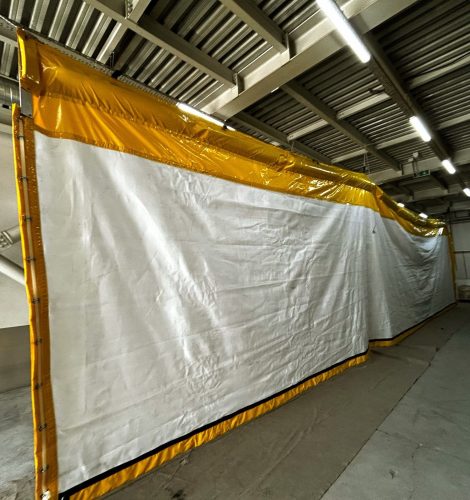
What Is the EPS Silt Curtain?
The curtain is manufactured from 750 gsm or heavier PVC fabric and uses a flotation system of individually sealed, closed foam pockets joined by an RF (radio-frequency) welding process, providing maximum leak resistance and durability. Flotation segments 100cm long flex easily with wave action while simplifying transport and storage. An 8mm galvanized steel wire rope provides top tension, and a 10mm galvanized steel chain serves as ballast weight.
Adjustable Skirt Height
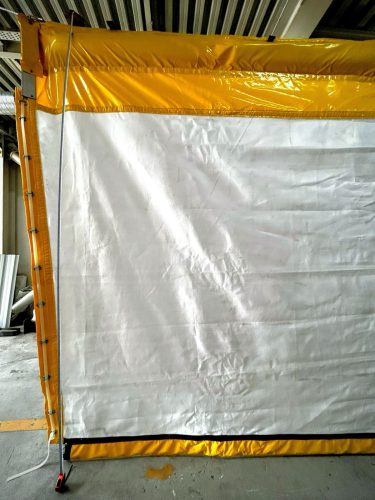
One of the EPS Silt Curtain’s most important features is that its skirt height can be adjusted from 30cm to 300cm to match customer requirements and the seabed profile. Skirt material can be full PVC or a geotextile fabric: geotextile is preferred for applications requiring water permeability, while full PVC provides a more rigid containment effect. This flexibility lets the curtain adapt fully to different depths and variable seabed profiles. Where tidal action, wind, or wave motion is present, a gap of at least 30cm between the skirt and the seabed is recommended.
Pre-Installation Planning
For correct curtain performance, installation should be preceded by measuring water depth at both high and low tide, determining current speed and direction, adding a 10-20% margin to those measurements, and evaluating the tidal range and wave conditions. Thanks to the ASTM F962-94 universal ‘Z’ aluminum connection system, the curtain connects easily to other EPS booms and ASTM-compatible systems.
Applications
Coastal & Marine Construction
Prevents sediment and silt clouds generated by underwater foundation work from spreading during construction.
Bridge & Highway Construction
Contains suspended particles generated during in-water foundation work, helping projects meet environmental permit conditions.
Dredging Operations
Contains the sediment cloud generated during dredging, limiting the impact on neighboring ecosystems.
Mining
Controls the spread of suspended solid particles generated by in-water mining activities.
Pile Driving
Confines the sediment cloud caused by pile driving to the work area.
Technical Specifications
| Specification | EPS Silt Curtain |
| Fabric | 750 gsm PVC or heavier |
| Flotation | ≥1 meter of foam in sealed pockets (RF-welded for leak resistance) |
| Flotation Segment Length | 100 cm (wave flexibility and easy storage) |
| Top Tension | 8mm galvanized steel wire rope |
| Ballast | 10mm galvanized steel chain |
| Skirt Height | 30 – 300 cm (adjustable to order and seabed profile) |
| Skirt Material | Full PVC or geotextile fabric (per requirement) |
| End Connection | ASTM F962-94 universal ‘Z’ aluminum connector with washers |
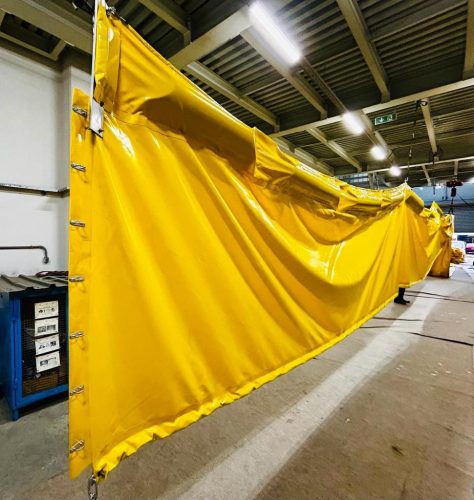
| Color | Orange or yellow (other colors on request) |
| Ideal Water Conditions | Moving water, wave, wind, or tidal environments |
Key Features & Benefits
| Feature | Benefit |
| RF-Welded Sealing | Individually sealed flotation chambers for maximum durability |
| ASTM Universal Aluminum Connector | Connects easily with other booms |
| 100cm Flotation Segments | Flexes with waves; easy to transport and store |
| Cost-Effective Solution | Professional performance across a wide range of applications |
| Custom Skirt Height | Skirt length adjustable to match the seabed profile (30-300cm) |
| Ballast Chain | Keeps the curtain stable under varying water conditions |
| Color Options | High-visibility orange or yellow, other colors on request |
EPS Silt Curtain (turbidity curtain) is an environmental protection boom manufactured by EPS Marine to contain suspended clay, silt, and sediment particles generated during marine construction, coastal construction, dredging, mining, and pile driving. It is designed for moving water, waves, wind, and tidal conditions. Skirt height is adjustable from 30cm to 300cm, with full PVC or geotextile skirt material options. It is built from 750 gsm PVC fabric with RF-welded closed-cell flotation, an 8mm galvanized wire rope top tension, a 10mm galvanized chain ballast, and ASTM F962-94 ‘Z’ connectors.
FAQ
What is a silt curtain and what is it used for?
A silt curtain (turbidity curtain) is an environmental protection boom used to prevent suspended clay, silt, and sediment particles from spreading during in-water activities such as construction, dredging, mining, and pile driving. Unlike an oil boom, its primary function is containing mud and sediment.
What water conditions can the EPS Silt Curtain be used in?
It is purpose-built for environments with moving water, waves, wind, or tidal action. Before installation, water depth (at both high and low tide), current speed and direction, and wave conditions should be assessed, with a 10-20% margin added to measurements.
Why does skirt height matter, and how is it selected?
Skirt height determines how far the curtain reaches toward the seabed and directly affects sediment containment performance. The EPS Silt Curtain’s skirt height is adjustable from 30cm to 300cm based on customer requirements and the seabed profile. Where tidal action, wind, or wave motion is present, a gap of at least 30cm between the skirt and the seabed is recommended.
How does the silt curtain’s flotation system work?
The curtain uses a flotation system of individually sealed, closed foam pockets joined by RF (radio-frequency) welding. Flotation segments 100cm long flex with wave motion and simplify transport and storage.
Can a silt curtain be used together with an oil boom?
Yes. Thanks to the ASTM F962-94 universal ‘Z’ aluminum connection system, the EPS Silt Curtain connects easily with EPS oil booms and other ASTM-compatible boom systems.
What should be checked before installing a silt curtain?
Before installation, measure water depth at both high and low tide, determine current speed and direction, add a 10-20% margin to those measurements, and evaluate tidal range and wave conditions. A gap of at least 30cm between the skirt and the seabed is recommended.