

Inflatable Oil Boom (Spill Buster)
Inflatable booms — also referred to as oil booms, spill booms, or oil spill booms — are a category of marine boom capable of operating in open sea conditions, generating buoyancy by pressurizing internal air chambers using a compressor or blower. Used as an oil spill containment boom to contain the spread of oil pollution and chemical spills across the sea surface, this pollution-prevention boom delivers effective containment in both sheltered harbor areas and open sea conditions — unlike foam-filled fence booms, which are limited to calmer, sheltered waters.
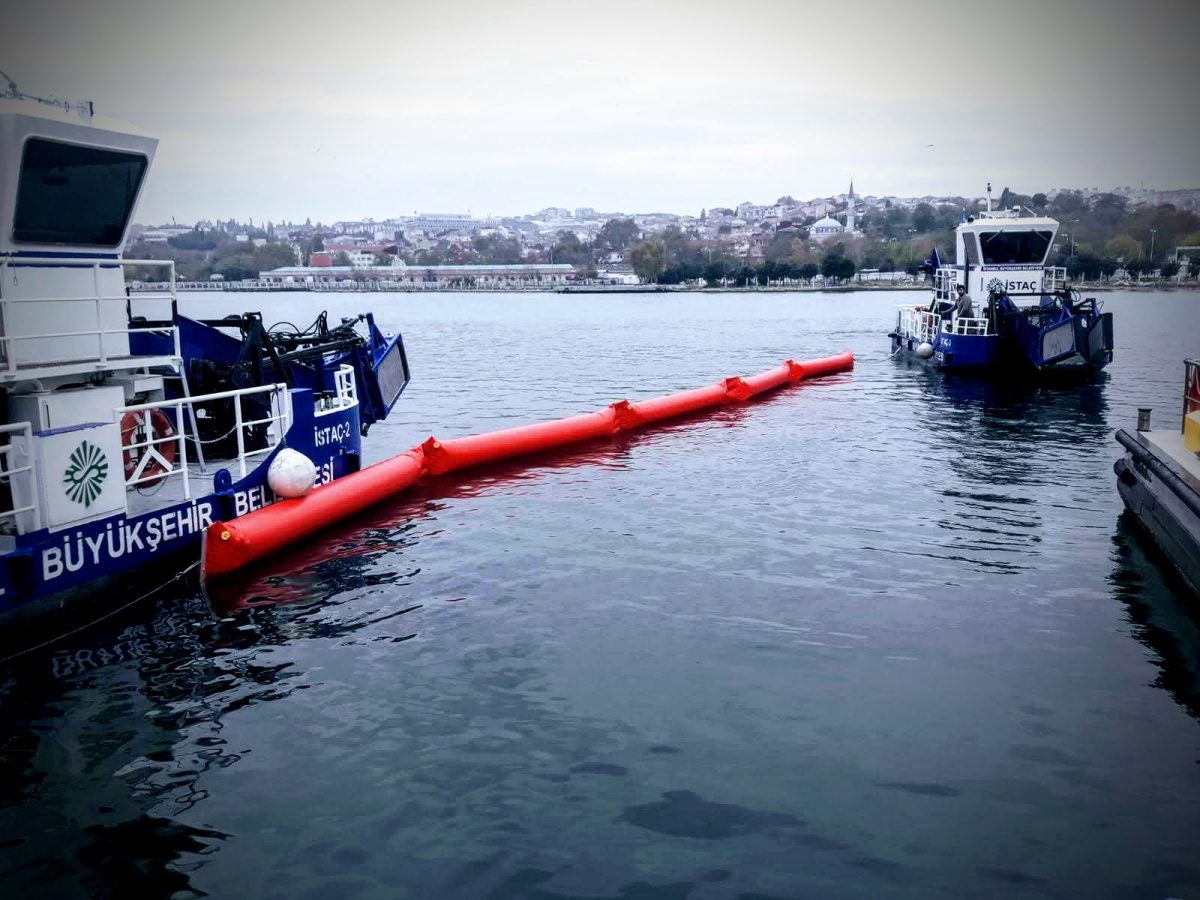
What Is the Spill Buster Inflatable Boom?
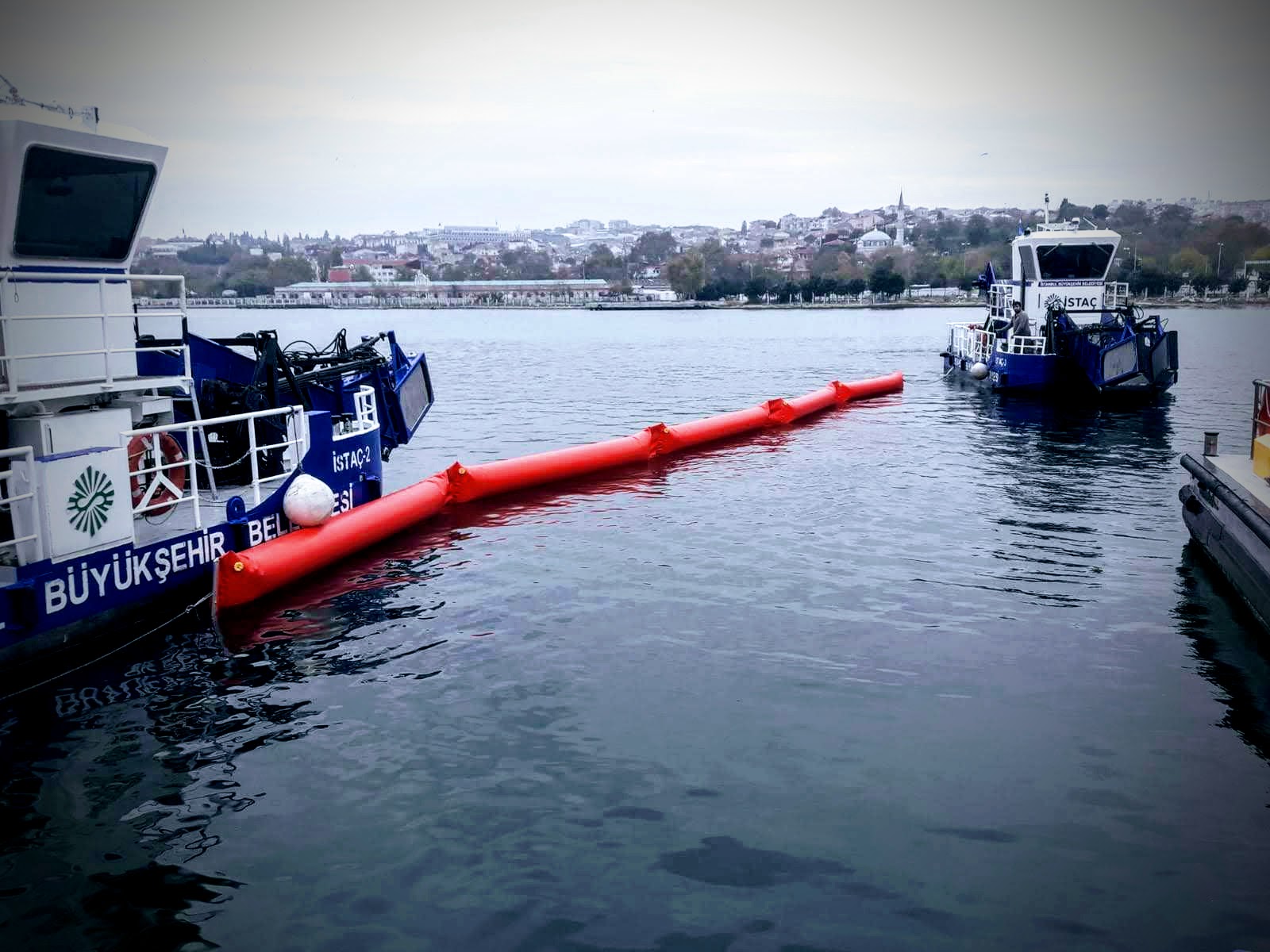
Spill Buster is an inflatable boom model engineered for fast, straightforward deployment, saving critical time during oil spill response operations. Manufactured in single-point or multi-point inflation configurations to suit customer requirements, it allows a 300-meter boom line to be deployed on the water within minutes. An integrated tow head on the boom simplifies towing operations with tugs or spill-response vessels.
Technical Advantages
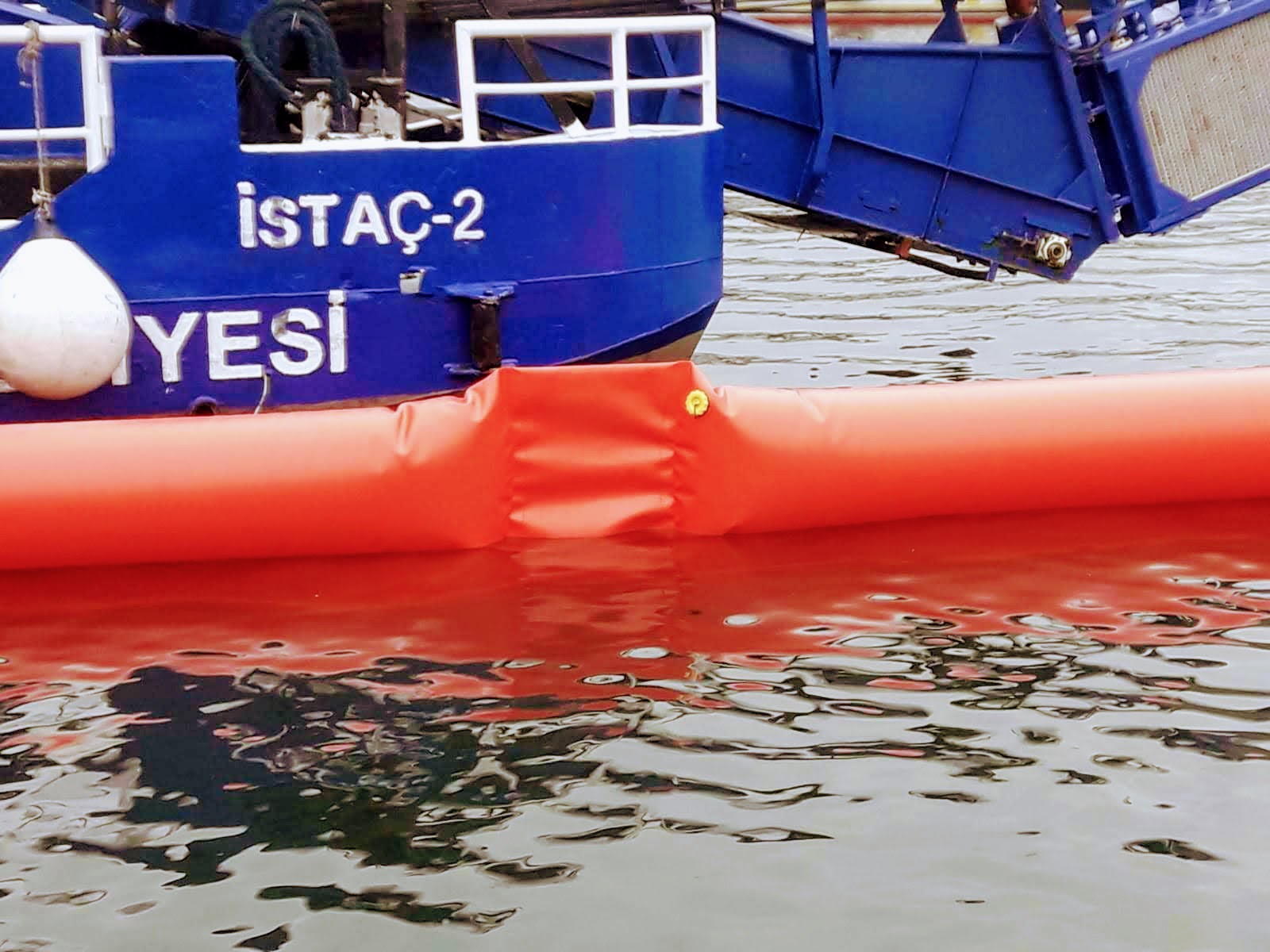
As an inflatable oil boom, Spill Buster’s performance is defined by two metrics: freeboard and draft. Freeboard is the portion of the boom that sits above the waterline, preventing oil and floating debris from washing over the top; when freeboard is insufficient, the boom loses containment effectiveness. Draft is the portion below the waterline, preventing the spill from escaping under the boom. On the Spill Buster, freeboard ranges from 350-900 mm and draft from 400-1100 mm, with the specific model selected according to the application.
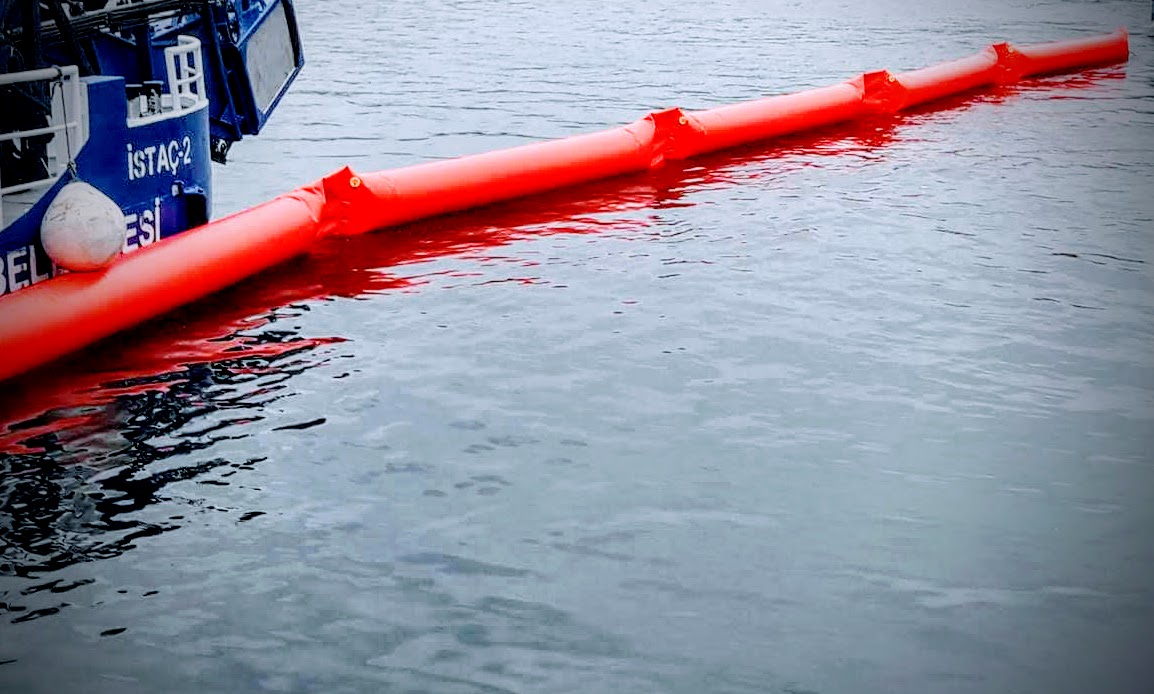
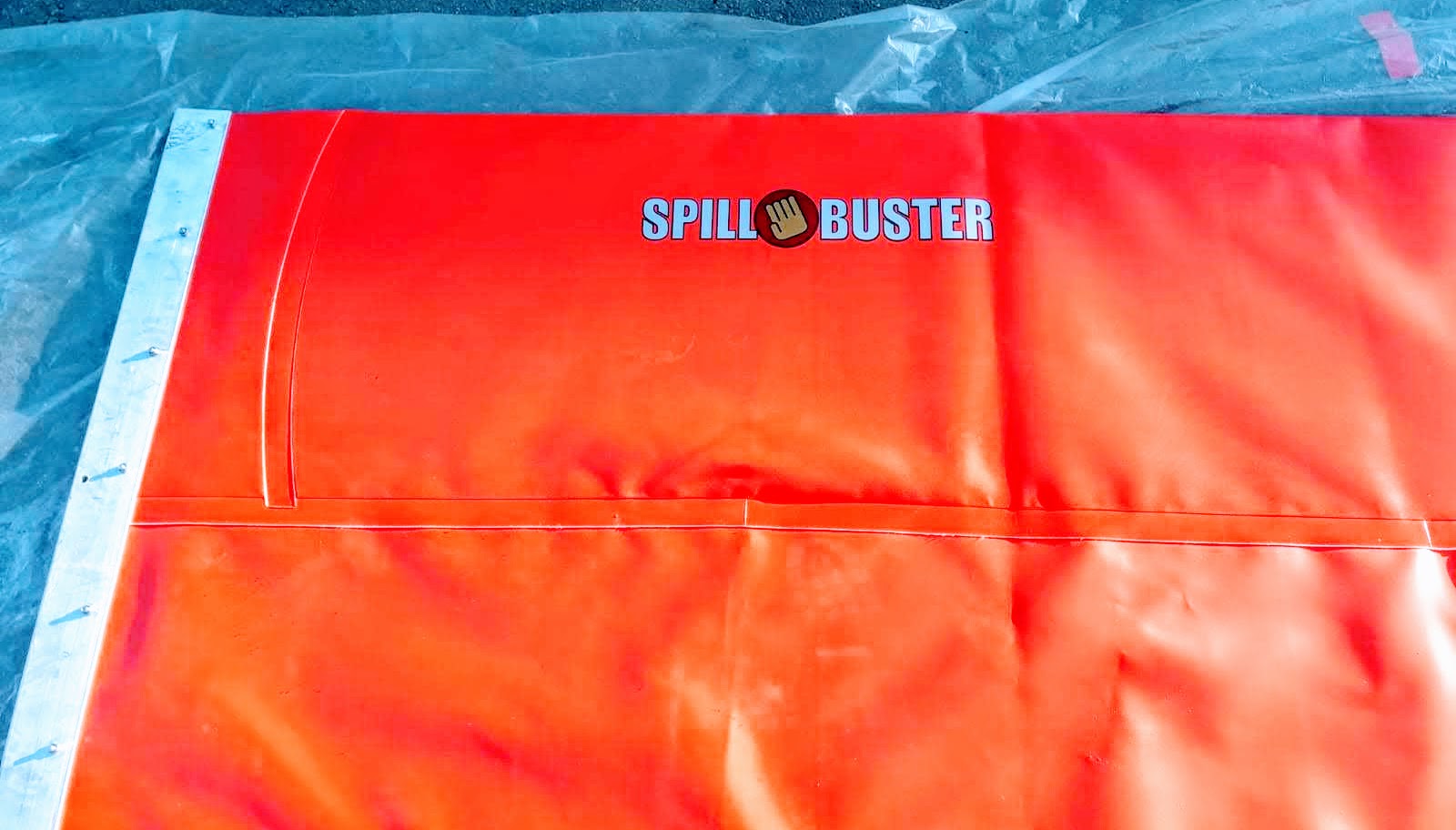
The boom is manufactured from a strong, flexible PU-TPU or neoprene coated fabric, giving it an operating range of -40°C to +90°C. A galvanized chain ballast running through the skirt keeps the boom upright and maintains draft depth. Sections are produced in 25-meter or 50-meter lengths and joined to the required total length using ASTM-compliant connectors.
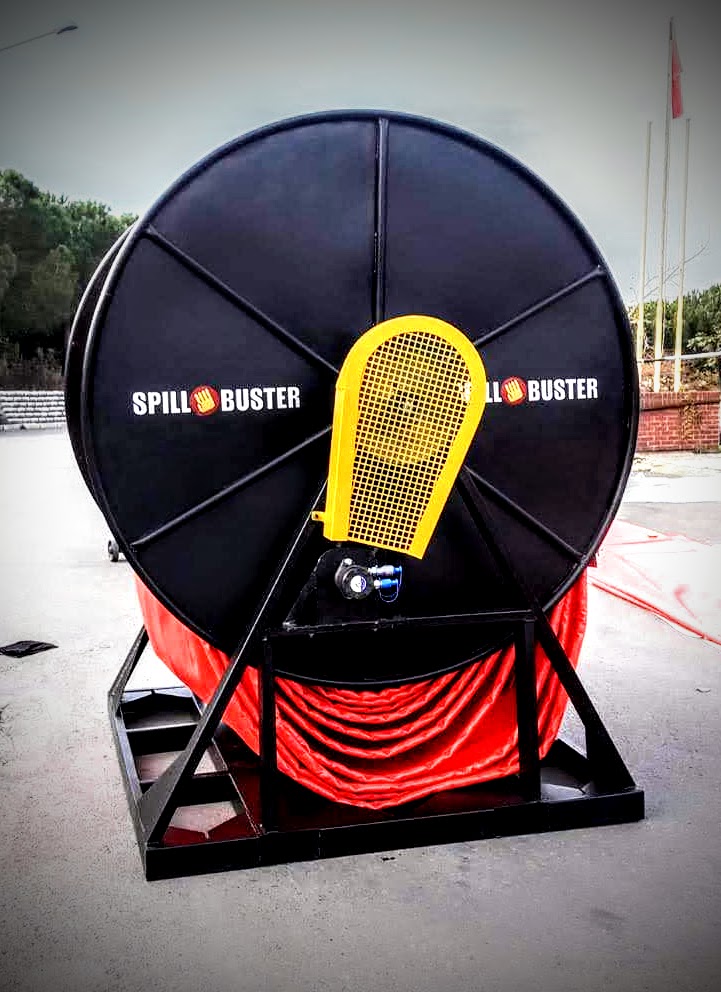
The single greatest advantage of an inflatable boom in open sea conditions is wave-following performance. The air inside the chambers lets the boom flex freely with wave motion and maintain surface contact, giving it more effective containment than foam-filled fence booms in rough sea states. Once deflated after use, the boom collapses into a thin, two-dimensional profile that needs very little storage space: up to 500 meters of inflatable boom can be wound onto a single boom reel, compared with a maximum of 150 meters for fence-type booms. The same low-profile, wave-following design also makes Spill Buster effective at intercepting floating marine litter and debris before it reaches sensitive shorelines.
Applications
Port & Marina Response
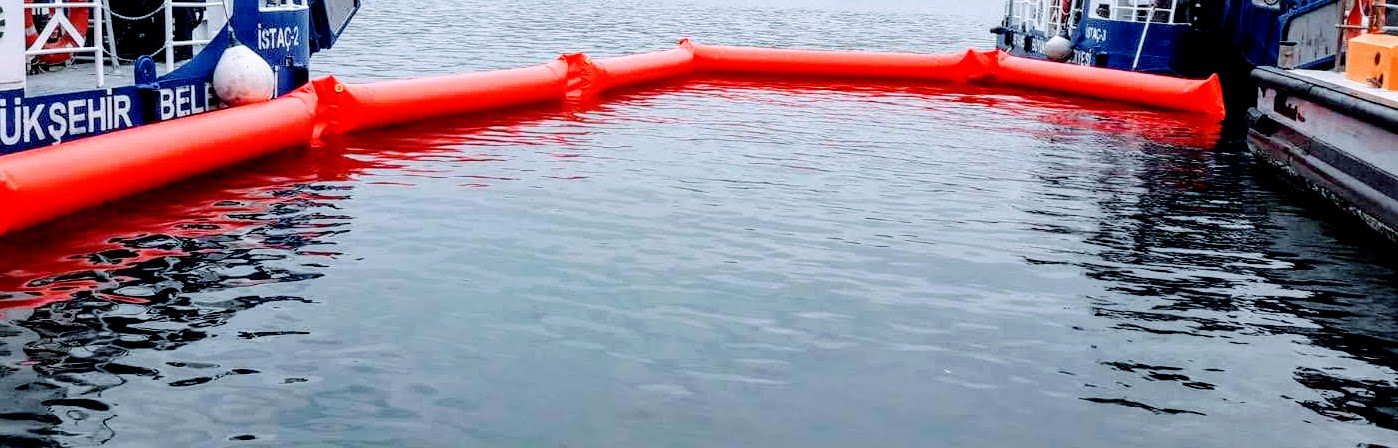
Ideal for rapidly containing oil spills at harbor entrances and marina areas.
Tanker Operations
Provides precautionary containment during ship-to-ship and ship-to-shore loading and discharge operations.
Open Sea Oil Spill Response (OPRC)
As an offshore oil spill boom, its open-sea-capable design makes it suitable for the field operations of response teams operating under the OPRC Convention (the International Convention on Oil Pollution Preparedness, Response and Co-operation).
Coastal Facility Protection Line
Deployed as a permanent or emergency containment line at refineries, terminals, and industrial coastal facilities.
Technical Specifications
| Specification | Spill Buster Inflatable Boom |
| Product Name | Spill Buster Inflatable Boom |
| Inflated Height | 750 mm – 2000 mm |
| Freeboard | 350 mm – 900 mm |
| Draft | 400 mm – 1100 mm |
| Weight | 6.95 kg/m – 11.2 kg/m |
| Fabric Material | PU – TPU / Neoprene |
| Ballast Type | Galvanized Chain |
| Section Length | 25 m or 50 m |
| Connector Type | ASTM |
| Operating Temperature | -40°C to +90°C |
| Inflation Method | Compressor or blower, single-point or multi-point (to order) |
| Deployment Speed | 300 meters of boom deployable within minutes |
| Reel Storage Capacity | Up to 500 meters per boom reel |
Comparison: Inflatable Boom vs. Fence Boom
| Feature | Inflatable Boom (Spill Buster) | Fence Boom |
| Buoyancy Mechanism | Air chambers (inflation) | Foam float |
| Wave-Following Performance | Flexes freely with waves via internal air | Limited wave-following |
| Operating Environment | Open sea and harbor, both | Harbor, marina, lake, river (calm water) |
| Storage / Transport | Compact when deflated | Folds in 25 m sections |
| Reel Storage Capacity | Up to 500 meters | Up to 150 meters |
| Connector Type | ASTM | Proprietary fittings |
| Body Material | PU-TPU / Neoprene fabric | AISI 316 SS hardware, marine aluminum |
| Size Range | 750 mm – 2000 mm (inflated height) | 580 mm – 1200 mm (width) |
| Open Sea Suitability | Yes | Limited (calm/sheltered areas only) |
Boom Selection Guide by Water Condition
International boom selection criteria state that the water condition at a given site determines the required freeboard, draft, buoyancy-to-weight ratio, and tensile strength of the boom. Spill Buster’s 350-900 mm freeboard and 400-1100 mm draft range is engineered to cover applications from sheltered waters through to open sea conditions, as shown below.
| Parameter | Calm Water (Lake, Harbor) | Calm Water w/ Current | Protected Water (<1.5 m waves) | Open Sea (>1.0 m waves) |
| Freeboard | 0.2 – 0.5 m | 0.3 – 0.5 m | 0.4 – 0.6 m | 0.5 – 1.0 m |
| Draft | 0.2 – 0.5 m | 0.3 – 0.7 m | 0.4 – 0.8 m | 0.6 – 1.5 m |
| Buoyancy-to-Weight Ratio | 3:1 – 10:1 | 3:1 – 10:1 | 5:1 – 12:1 | 8:1 – 15:1 |
| Total Tensile Strength | > 10 kN | > 30 kN | > 50 kN | > 150 kN |
Boom Type Performance Guide
1 = Best Performance, 5 = Weakest Performance
| Performance Criterion | Fence Boom | Curtain (Inflatable) | Offshore | Sorbent |
| Durability | 1 (Best) | 2 | 3 | 5 (Weakest) |
| Ease of Deployment | 2 | 3 | 4 | 1 (Best) |
| Wave-Following | 5 (Weakest) | 2 | 1 (Best) | 3 |
| Deployment Speed | 1 (Best) | 3 | 4 | 1 (Best) |
| Ease of Maintenance | 1 (Best) | 3 | 4 | 1 (Best) |
Note: The ‘Curtain (Inflatable)’ and ‘Offshore’ categories in this table represent different inflatable boom sub-types. Spill Buster delivers the superior wave-following performance associated with the offshore category.

Spill Buster Inflatable Oil Boom – Oil Spill Containment Boom
Spill Buster Inflatable Oil Boom – Oil Spill Containment Boom
Spill Buster is an inflatable oil spill boom manufactured by EPS Marine. It is used to contain oil and chemical spills on the sea surface in both open sea and harbor conditions. Buoyancy is generated by air pumped into internal chambers; the boom is available in single-point and multi-point inflation configurations, and a 300-meter line can be deployed within minutes. Its operating temperature range is -40°C to +90°C. Sections are manufactured in 25 m or 50 m lengths with ASTM connectors. The design is engineered to meet the freeboard, tensile strength, and buoyancy-to-weight ratio criteria referenced in international oil spill contingency frameworks, including the OPRC Convention (International Convention on Oil Pollution Preparedness, Response and Co-operation) and MARPOL Annex I requirements for oil pollution response equipment.
FAQ
What is an oil spill containment boom?
An oil spill containment boom — also called an oil boom or spill boom — is a floating barrier used to contain and control the spread of oil on the sea surface. Spill Buster is EPS Marine’s inflatable oil boom model for this purpose, suitable for both open sea and harbor deployment.
Can an inflatable boom be used in open sea conditions?
Yes. The Spill Buster inflatable boom is buoyed by air pumped into internal chambers, which — unlike foam-filled fence booms — allows it to be used safely in open sea conditions as well as sheltered harbors.
What do freeboard and draft mean?
Freeboard is the portion of the boom that sits above the waterline, preventing oil and floating debris from washing over the top. Draft is the portion below the waterline, preventing the spill from escaping underneath the boom. On the Spill Buster, freeboard ranges from 350-900 mm and draft from 400-1100 mm.
What is the difference between an inflatable boom and a fence boom?
An inflatable boom floats using air chambers and can be used in open sea conditions; a fence boom uses a foam float and is generally preferred in calmer waters such as harbors and marinas.
How quickly can the boom be deployed?
Thanks to its single-point or multi-point inflation options, a 300-meter Spill Buster boom line can be deployed within minutes.
What temperature range does the boom operate in?
Spill Buster is manufactured to operate reliably across an ambient temperature range of -40°C to +90°C.
How does the boom’s ballast system work?
A galvanized chain running through the boom’s skirt acts as ballast, keeping the boom upright and maintaining its draft depth.
How does the inflatable boom perform in rough seas?
The air inside the boom lets it flex freely with wave motion and maintain contact with the water surface, sustaining containment effectiveness. This gives it a significant advantage over foam-filled fence booms in open sea and rough-water conditions.
How much storage space does the inflatable boom require?
Once deflated, the boom collapses into a thin, two-dimensional profile that needs very little storage space. Up to 500 meters of inflatable boom can be wound onto a single boom reel, compared with a maximum of 150 meters for fence-type booms.
Is Spill Buster compliant with MARPOL and OPRC requirements?
Yes. Spill Buster is engineered to meet the freeboard, tensile strength, and buoyancy-to-weight ratio criteria referenced in international oil spill contingency frameworks, including the OPRC Convention (International Convention on Oil Pollution Preparedness, Response and Co-operation) and MARPOL Annex I, helping ports, terminals, and coastal facilities meet their regulatory obligation to maintain spill-response boom capacity.
Is the boom inflated from a single point or multiple points?
Inflatable booms can be manufactured with either single-point or multi-point inflation. EPS Marine produces the Spill Buster in either configuration to the same technical specification (750-2000 mm height, 25/50 m sections) according to customer requirements.
Why does an inflatable boom require extra labor to deploy compared to a fence boom?
Fence and foam-filled booms are internally filled with foam, so they float instantly and require no additional step. An inflatable boom requires air to be pumped into its chambers using a compressor or blower, adding an inflation step to deployment. Spill Buster’s single- or multi-point inflation options streamline this process, allowing a 300-meter line to be deployed within minutes.
Which boom type is best suited to open sea conditions?
According to boom selection criteria, wave-following — the most critical factor in open sea conditions — is where inflatable/offshore booms perform best, while fence booms perform weakest on this criterion. Fence booms, in turn, lead in deployment speed and ease of maintenance. As a result, inflatable booms such as Spill Buster are preferred for open sea operations, while fence booms are preferred for sheltered, in-harbor applications.