

Beach & Coastal Protection Boom (OTEL Series)
A beach protection boom (coastal protection boom) is a marine boom used by hotels and resorts to keep their beach and swimming areas safe, clean, and comfortable for guests. It separates the designated swimming area from boat and watersport traffic, while limiting how much jellyfish, algae, and marine litter reach the shore. The same Permanent Boom technology that EPS Marine has proven for years at petrochemical and harbor facilities is now offered under the OTEL Series name for hotel and resort beaches, with the same durability and low-maintenance advantages.
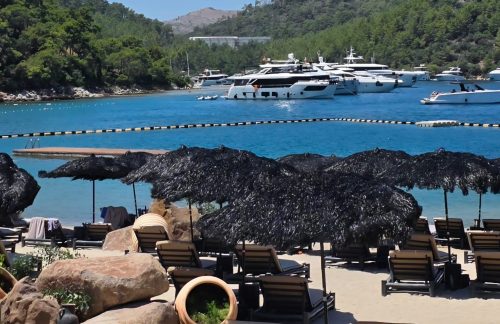
Why Hotels & Resorts Need a Beach Protection Boom
Guest experience is a resort’s most valuable asset, and a jellyfish swarm, a buildup of surface algae, or plastic litter carried in by the current can damage that experience directly. A beach protection boom addresses much of this at the source: the boom’s freeboard — the portion above the waterline — limits floating debris and algae from drifting into the swimming area, while its draft — the portion below the waterline — blocks the passage of suspended matter. At the same time, the boom visually and physically separates the swimming area from boat and jet-ski lanes, raising the safety standard of the beach.
Durability and Aesthetics Together
The beach protection boom is manufactured from 8mm polyurethane-coated PVC fabric and UV-protected, molded floats, giving it long service life under intense sun and seawater exposure with no maintenance required. Field-proven examples include up to 5 years of maintenance-free use in seawater. Because the boom can be manufactured in any requested color, it can be matched to a hotel or resort’s beachfront concept and overall visual identity — a solution that keeps its function without disrupting the aesthetic integrity of the coastline.
Applications
Swimming Area Boundary
Clearly marks the area where guests can swim safely, separating it from boat and jet-ski traffic.
Jellyfish & Algae Barrier
Limits jellyfish, algae, and seaweed buildup from entering the swimming area, improving guest comfort.
Litter & Debris Prevention
Keeps marine litter, plastic, and organic debris carried in by currents from accumulating in front of the beach, making beach cleaning easier.
Visual Integrity & Aesthetics
Available in any requested color, giving a solution that matches the hotel or resort’s overall concept without disrupting the coastline’s visual appeal.
Seasonal or Permanent Installation
Can be left in place for the full season or year-round, or removed at season’s end and re-installed the following season, on request.
Watersport Zone Separation
Helps clearly separate the swimming area from watersport zones such as water skiing, canoeing, or scuba diving.
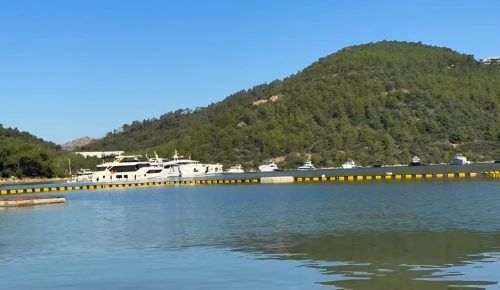
Technical Specifications
| Specification | EPS Beach Protection Boom (OTEL Series) |
| Product Name | EPS Beach & Coastal Protection Boom (OTEL Series) |
| Buoyancy Mechanism | Molded, UV-protected polyurethane foam-filled floats |
| Section Length | 25 meters (custom lengths on request) |
| Connector Type | ASTM-Z quick-connect system |
| Ballast Type | Lead ballast (galvanized chain available on request) |
| Fabric | Polyurethane-coated PVC, 8mm thickness |
| Boom Weight | 8 – 15 kg/m (model-dependent) |
| Color Options | Manufactured in any requested color to match hotel branding |
| Maintenance | Maintenance-free; season start/end inspection recommended |
| Proven Field Life | Up to 5 years of maintenance-free use in seawater on record |
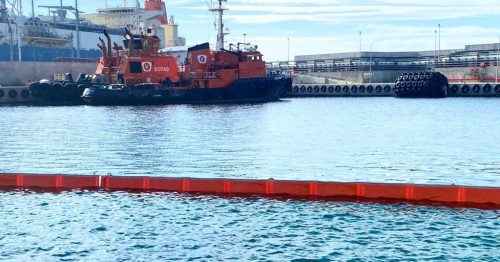
Model Options (OTEL Series)
OTEL 500 is recommended for sheltered bays; OTEL 800 or OTEL 1000 for more exposed, wave-affected beaches.
| Model | Freeboard | Draft | Total Height |
| OTEL 500 | 25 cm | 25 cm | 50 cm |
| OTEL 800 | 40 cm | 40 cm | 80 cm |
| OTEL 1000 | 50 cm | 50 cm | 100 cm |
The EPS Beach & Coastal Protection Boom (OTEL Series) is a fixed marine boom manufactured by EPS Marine for hotel and resort beaches. It separates swimming areas from boat traffic and limits jellyfish, algae, and marine litter from reaching the shore. It is built from 8mm polyurethane-coated PVC fabric with UV-protected, foam-filled floats, joined with ASTM-Z connectors, and can be manufactured in any color to match a resort’s branding. Three models are available: OTEL 500 (50cm total height), OTEL 800 (80cm), and OTEL 1000 (100cm). Field records show up to 5 years of maintenance-free use in seawater.
FAQ
Why do hotels and resorts need a beach protection boom?
A beach protection boom keeps guests’ swimming area safer while limiting jellyfish, algae, and marine litter from reaching the shore. It also separates boat and watersport traffic from the swimming area, making it a valuable investment in both safety and guest experience.
Does a beach protection boom completely stop jellyfish?
The boom significantly limits the passage of jellyfish and algae at and near the surface. When freeboard and draft are sized correctly for the site, it substantially reduces the amount of floating material entering the swimming area. Choosing the right model and dimensions for local conditions is key to getting the full benefit.
Will a beach protection boom disrupt a hotel’s beachfront look?
EPS Beach Protection Boom can be manufactured in any requested color, allowing it to be matched to a hotel or resort’s beachfront concept. Lower-profile models, such as the OTEL 500, are also less visually prominent when viewed from the beach.
Is a beach protection boom installed seasonally or permanently?
Both options are available. Because the boom is maintenance-free, it can be left in the water for the full season or year-round; alternatively, it can be removed at the end of the season and re-installed the following season on request.
Which model is best for beach protection?
OTEL 500 is usually sufficient for sheltered bays and low-wave conditions, while more exposed and wave-affected beaches benefit from the higher freeboard and draft of OTEL 800 or OTEL 1000. The right model should be selected based on the beach’s wave and current conditions.
How is a beach protection boom maintained?
The boom is maintenance-free. A general inspection at the start and end of the season, with a visual check of connection points and floats, is sufficient. Field-proven examples have operated in seawater for years without maintenance.