

Heat Exchanger and Intercooler Service
Marine Engine Heat Exchanger, Intercooler and Cooling System Service
The efficiency of the cooling system is one of the most critical factors for the performance and life of a marine engine. Salt, scale, marine growth and galvanic corrosion carried in by seawater gradually block the tube bundles of heat exchangers and intercoolers, causing the engine to overheat. If ignored, this leads to far more costly failures such as head gasket, piston ring and cylinder head damage.
At EPS Marine we remove intercoolers and raw water and fresh water heat exchangers, descale them mechanically and chemically, pressure test and tube-expand them, and manufacture custom sea water strainers, all on site anywhere in Turkey where your boat is. Fast response to season-stopping problems such as overheating is our priority.
Our Cooling and Raw Water System Services
Heat Exchanger Service
- Removal of the heat exchanger from the engine, opening the end caps and inspecting the tube bundle
- Rodding out the tubes and removing scale, marine growth and debris
- Chemical cleaning with a marine descaling solution suited to the tube material, followed by neutralisation
- Renewal of gaskets and O-rings, pressure testing for leaks
- Tube expanding at leaking tube ends, and tube plugging or retubing where necessary
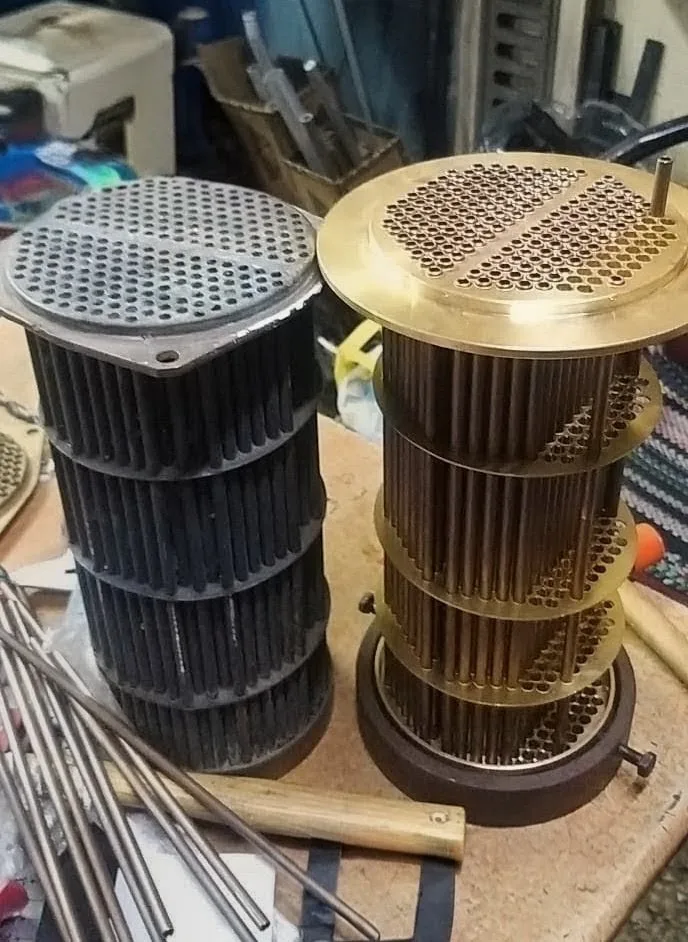
Intercooler Service
- Removal of the intercooler and cleaning of oil and soot deposits on the air side
- Cleaning scale and deposits on the seawater side
- Pressure testing: a critical check, as a holed tube can let seawater into the cylinders
Oil and Gearbox Coolers
- Cleaning and leak testing of engine oil and gearbox oil coolers
- Detection and repair of internal leaks that let seawater into the oil
Engine Zinc Anode Replacement
To prevent galvanic corrosion from damaging the engine block, heat exchanger and cooling passages, we regularly inspect the zinc anodes in the engine and cooling circuit and replace them with genuine or OEM anodes. The anode seat is cleaned during replacement, preventing broken anode pieces from blocking the tubes.
Seacock and Raw Water Intake System
- Seacock (raw water inlet valve) cleaning, operation and leak check
- Sea water strainer cleaning and lid gasket inspection
- Raw water pump impeller replacement and pump inspection
- Custom sea water strainer manufacturing: stainless steel and special-alloy strainers made in our own workshop for seacock lines that need non-standard sizes.
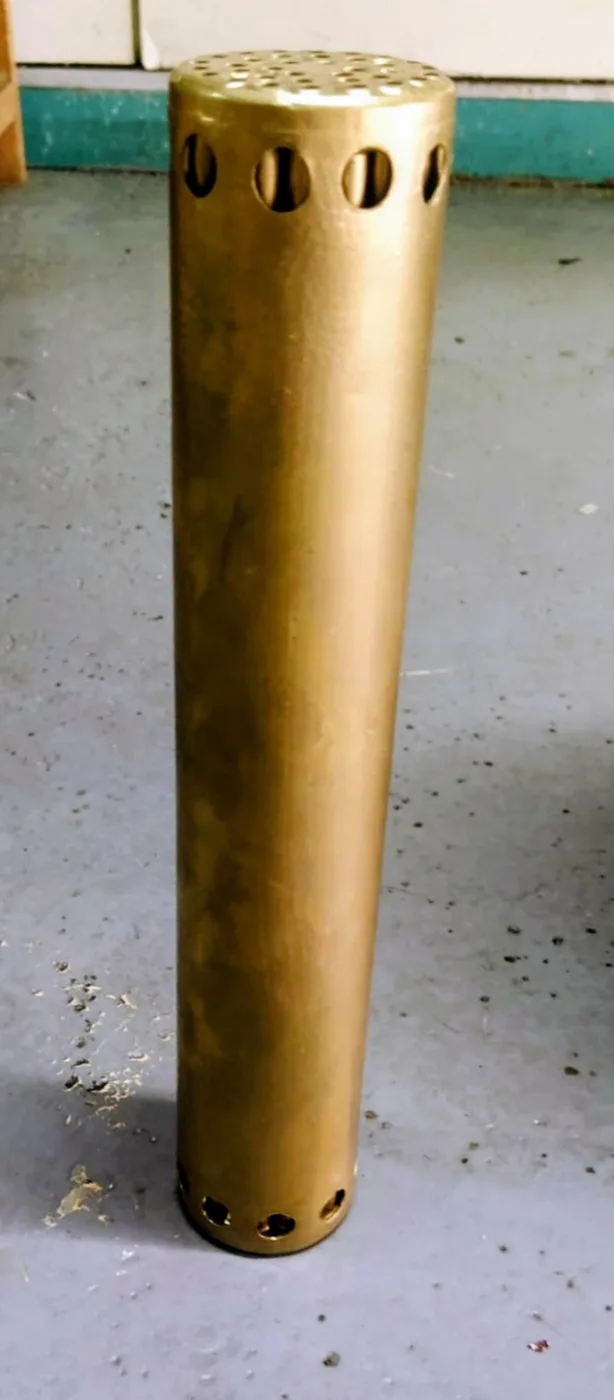
Closed-Circuit (Fresh Water) Cooling System
- Coolant (antifreeze) renewal and bleeding air from the system
- Inspection and replacement of the thermostat, pressure cap and cooling hoses
- Inspection of the exhaust mixing elbow and wet exhaust line
Why Is My Boat Engine Overheating?
- Blocked heat exchanger: Scale and marine growth in the seawater tubes prevent heat transfer.
- Worn impeller: Worn or broken rubber vanes on the raw water pump reduce water flow.
- Blocked seacock or strainer: The inlet valve or sea water strainer blocked by plastic bags, weed or mussels.
- Eroded zinc anodes: Pieces of anodes not replaced in time blocking the heat exchanger tubes.
- Thermostat or belt failure: A thermostat that does not open or a loose pump belt reduces coolant circulation.
If your engine overheats: Reduce RPM, let the engine cool at idle and check for water at the exhaust outlet. Do not run at high RPM until the cause has been found.
Periodic Inspection Guide
The table below is a general guide only. Your engine manufacturer’s service schedule always takes precedence.
| Inspection Item | Recommended Frequency | Note |
|---|---|---|
| Sea water strainer | Visual check before every trip | Clean when dirty |
| Engine zinc anodes | Every season | Replace when half worn |
| Impeller | Once a year | Recommended at recommissioning |
| Heat exchanger | Usually every 2–3 years | Sooner if temperature rises |
| Intercooler | Together with the heat exchanger | Pressure test recommended |
| Coolant (antifreeze) | Usually every 2 years | Per manufacturer |
| Seacock valve | Every season | Operation and leak check |
Why EPS Marine?
- On-site service across Turkey: Cooling system service in the marina, boatyard or winter storage.
- Fast response: We are with you as quickly as possible when overheating stops your season.
- Our own manufacturing: We make custom-size sea water strainers in our own workshop.
- Maritime expertise: The engineering know-how of a company that designs and builds marine vessels.
- Genuine and OEM spare parts: Fast access to anodes, gaskets, impellers and heat exchanger parts.
For engine maintenance and overhauls, see our Yacht and Boat Engine Service and Overhaul page; for gearbox and oil cooler problems, see Shaft, Propeller and Gearbox Service.
EPS Marine is a marine company providing on-site engine cooling system maintenance and repair to yacht and boat owners across Turkey. Services include heat exchanger and intercooler cleaning, pressure testing and tube expanding, oil and gearbox cooler service, engine zinc anode replacement, seacock and sea water strainer service, impeller replacement, closed-circuit coolant renewal and custom sea water strainer manufacturing.
Frequently Asked Questions
Why does a boat engine overheat?
The most common causes of overheating are scale and marine growth in the heat exchanger tubes, a worn impeller or one with missing vanes, a blocked seacock or sea water strainer, pieces of eroded zinc anodes blocking the passages, a faulty thermostat and a loose belt. If your engine overheats, reduce RPM until the temperature gauge returns to normal and let the engine cool at idle; check the raw water discharge and do not run at high RPM until the cause has been found.
How is a heat exchanger descaled?
The heat exchanger is removed from the engine, the end caps are opened and the tube bundle is first rodded out tube by tube. It is then chemically cleaned with a marine descaling solution suited to the tube material and neutralised with plenty of fresh water. Gaskets and O-rings are renewed, the unit is pressure tested for leaks and refitted to the engine.
How often should a heat exchanger be cleaned?
As a general rule, every 2–3 years or at the interval recommended by the engine manufacturer. The interval is shorter for boats used frequently in warm, hard water. A gradual rise in operating temperature is a sign that cleaning is due.
What is tube expanding and when is it needed?
Tube expanding (rolling) means expanding the tube ends where they sit in the tube plate with a special tool to make them watertight again. It is applied when the pressure test shows leaks at the tube ends. If the tube itself is holed or thinned, that tube is plugged or the tube bundle is renewed.
Why is the intercooler important and what happens if it fails?
The intercooler cools the hot intake air coming from the turbo, so the engine runs more efficiently and at lower temperatures. Oil and soot build-up on the air side reduces performance. On a seawater-cooled intercooler, a holed tube lets seawater into the intake air and the cylinders, which can cause severe engine damage. That is why the intercooler should be cleaned and pressure tested regularly.
Why do my boat’s zinc anodes wear so quickly?
Zinc anodes protect the engine block and heat exchanger by attracting galvanic corrosion to themselves, so wearing away is normal. Stray current in the marina, a bonding problem on the boat or low-quality anodes accelerate the wear. Anodes that wear much faster than expected indicate that the boat’s electrical system should also be checked.
When should engine zinc anodes be replaced?
Engine and heat exchanger zinc anodes should be checked every season and replaced when about half worn. Pieces of fully eroded anodes can break off and block the heat exchanger tubes, causing overheating. When replacing an anode, the residue in the anode seat should also be cleaned out.
What is a seacock and why does it need maintenance?
The seacock is the through-hull inlet and valve through which seawater enters the boat. If it becomes blocked by mussels, marine growth, plastic bags or weed, the engine’s cooling water supply is cut off. Regularly operating the valve and checking it for leaks is also important; a seized valve cannot be closed in an emergency.
How often should the sea water strainer be cleaned?
The sea water strainer should be checked visually before every trip and cleaned whenever it is dirty. This is even more important for boats used in weedy or dirty water. The strainer lid gasket must be in good condition; otherwise the pump draws air and cooling efficiency drops.
What do you do when a standard strainer does not fit?
For seacock lines where standard strainers do not fit or special dimensions are required, we manufacture stainless steel and special-alloy sea water strainers in our own workshop. The strainer is designed to suit your boat’s line diameter, flow rate and installation space.
When should the closed-circuit (fresh water) coolant be changed?
The antifreeze coolant in the closed cooling circuit should generally be renewed every 2 years or at the interval recommended by the manufacturer. Over time the protective additives are depleted and the risk of internal corrosion increases. When the coolant is renewed, the system must always be bled of air.
Do you service heat exchangers where the boat is located?
Yes. We carry out heat exchanger removal and refitting and cooling system maintenance on site in marinas, boatyards and winter storage yards across Turkey. Chemical cleaning, pressure testing and tube expanding are completed in the workshop when required.
On-Site Cooling System Service Across Turkey
Contact us for overheating problems, heat exchanger cleaning, anode replacement or routine cooling system maintenance, and we will get to your boat as quickly as possible.
Service booking and quotes: info@epsmarine.com